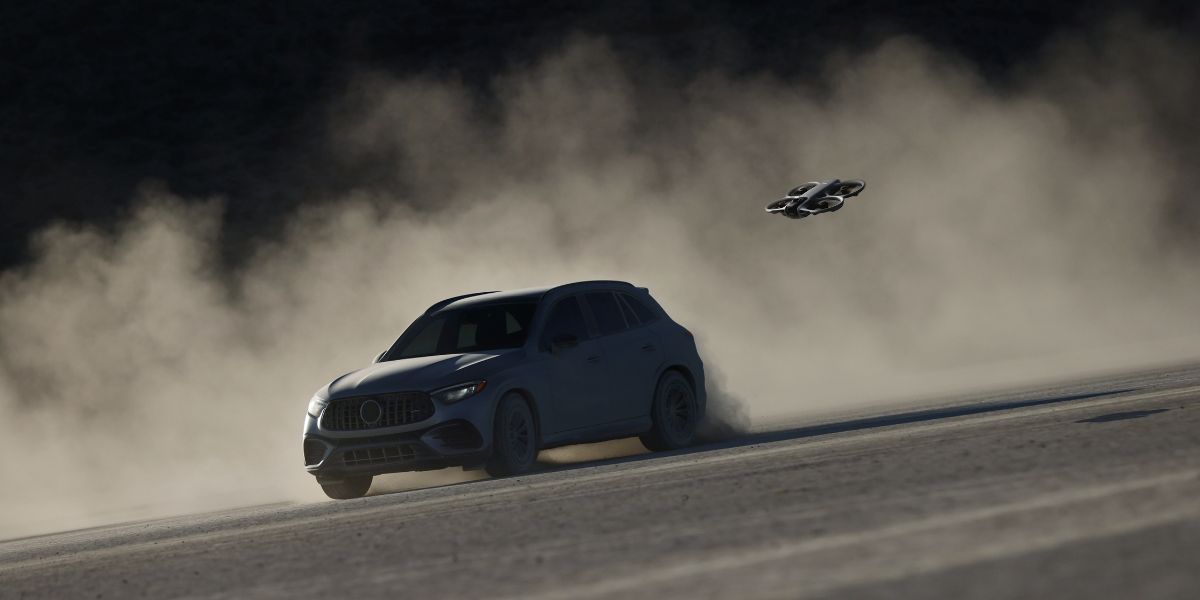
Imagine standing at the top of a snow-covered mountain, ready to capture your perfect ski run. Normally, getting cinematic, dynamic footage of this moment requires a highly skilled drone pilot anticipating your every turn. With the new DJI Avata 360, you simply launch the drone, tell it to follow you, and start skiing. You can completely ignore where the camera is pointing.
DJI has officially announced their latest flagship release, and it completely rewrites the rulebook for solo content creators. By combining the high-speed thrill of FPV (First-Person View) flight with an incredibly advanced 360-degree imaging system, this drone removes the barrier between having a great idea and capturing it perfectly.
Here is a deep dive into why the DJI Avata 360 is poised to become the ultimate tool in your creative arsenal.
Where We Were, Where We Are
To understand why the Avata 360 is so exciting, you have to look at what made its predecessors so successful compared to traditional camera drones like the Mavic or Mini series.
Traditional drones are built for high-altitude, slow, sweeping landscape shots. The Avata series, however, was designed to get up close and personal. It popularised the “cinewhoop” design for the everyday consumer, integrating sturdy propeller guards directly into the frame. This meant that instead of a catastrophic crash, an Avata could gently bump into a wall, a tree branch, or a doorframe, and simply bounce off and keep flying. It made flying indoors and through tight gaps less intimidating.

DJI also paired the drone with an intuitive motion controller and immersive goggles. Instead of manipulating two complex joysticks, you simply tilted your wrist in the direction you wanted to fly. It felt more like a video game than piloting an aircraft. The Avata made the thrill of flight accessible to anyone and became more of a sport to test its limits and a joy when you pull of that unbelievable trick.
Full 360-Degree Imaging
The core of the Avata 360 is its brand new 1/1.1-inch square CMOS sensor, boasting an f/1.9 aperture and massive 2.4 μm pixels. If you want pristine, light-rich footage, this is exactly what you need. It shoots spherical panoramic video in stunning 8K/60fps HDR, and can snap absolutely jaw-dropping 120-megapixel panoramic photos. I always really like the vibrant colours of the DJI camera and on cloudy days they capture such a beautiful backdrop to your storytelling.

Because the drone captures everything in a complete sphere, the pressure to nail the perfect camera angle mid-flight is entirely gone. You fly the route, and in post-production, you dictate the camera movement. The new 360-degree virtual gimbal allows for infinite rotation and pitch. You can digitally roll the camera to create dramatic, FPV-style tension, or smoothly pan from a forward-facing shot to an inverted perspective looking directly behind you. It’s like recreating those hi-speed pans from films like Top Gun Maverik or F1 the Movie.

For creators who occasionally need a standard shot, perhaps when flying through incredibly tight indoor spaces where 360-degree stitching might struggle, the drone seamlessly switches to Single Lens mode. This captures beautiful, ready-to-publish flat video in 4K/60fps without any need for panoramic editing.
Cinema-Grade Tracking on Autopilot
The DJI Avata 360 stands out as a professional tool with its intelligent tracking. The Spotlight feature now includes a “Free mode,” a capability previously reserved for high-end cinema rigs like the Inspire 3. In Free mode, the subject is automatically locked in the centre of the frame, allowing you to fly the drone wherever you want around them without having to manually manage the gimbal.

For solo creators, the upgraded ActiveTrack 360 is nothing short of brilliant. It features scenario-based tracking tailored to specific activities:
Standard Mode: Perfect for tracking people. The drone remembers the initial distance and height, maintaining a smooth, stable frame even if the subject speeds up or walks downhill.

Cycling Mode: The algorithm automatically leaves a 60% lead room in the direction the cyclist is moving. If you are riding quickly down a narrow forest path, the drone reacts with high agility to stay locked on, rather than losing you around a sharp bend.
Skiing Mode: Designed for the rapid, sharp movements of downhill carving. The gimbal responds quickly with moderate angles to capture the action dynamically without inducing dizzying camera shake.
FPV Thrills and Head Tracking Integration
When paired with DJI Goggles, the Avata 360 delivers an unparalleled immersive experience. The O4+ video transmission system provides a flawless 1080p/60fps colour feed from up to 20 kilometres away. Even in dense urban environments with heavy signal interference, the dual-channel transmission ensures a stable, high-definition connection.

If you are flying with the Goggles 3 or N3, you can activate Head Tracking. Simply turn your head to look around the environment while the drone flies forward. If you look too far away from your flight path, a clever colour flight assistance view automatically pops up to ensure you do not fly into a tree. Add in the Virtual Easy ACRO feature, and even complete beginners can execute complex FPV drifts and rolls with a single click. This is the most unbelievable experience giving you a sense of speed, as well as a true representation of what the camera is capturing.
Unmatched Safety in Total Darkness
Flying an FPV drone can be intimidating, but the Avata 360 features an omnidirectional obstacle avoidance system that borders on Harry Potter style magic. Utilising dual fisheye lenses, 3D bottom sensors, and a forward-facing LiDAR system, this drone can actively avoid obstacles in environments down to 0.1 lux, so effectively a pitch black.
This low-light capability completely transforms the Return to Home (RTH) function. Even if you lose visual connection in complete darkness, the LiDAR will detect obstacles and route the drone safely over them. Furthermore, using Visual Simultaneous Localisation and Mapping (VSLAM), the Avata 360 can remember its flight path and return safely to a location without a GPS signal, such as a covered apartment balcony.
To top it off, the drone retains the series’ signature integrated propeller guards. If you do happen to crash and scratch the protruding panoramic lenses, DJI has designed a replaceable front lens element that you can swap out yourself with a simple tool kit. No more sending it away to get fixed or forking out for a whole new one.
A Painless Post-Flight Workflow
DJI has clearly thought about how creators actually manage their files. The Avata 360 comes with a massive 42GB of internal storage, saving you from the inevitable frustration of forgetting a microSD card.
The smartest feature, however, is the Bluetooth standby mode. After a long day of filming, you can power down the drone and pack it in your bag. For the next 12 hours, the drone remains in a low-power standby state. You can open the DJI Fly app on your phone, wake the drone via Bluetooth, and use Wi-Fi 6 to transfer files at a blistering 100 MB/s, all without ever taking the drone out of your backpack.
Even the charging hub has been completely rethought. It now supports power accumulation, allowing you to drain the remaining juice from multiple low-power batteries into a single battery, giving you enough charge for one last vital flight.

Australian Pricing and Availability
The DJI Avata 360 is a masterclass in making complex aerial cinematography accessible to everyone. The drone is available for pre-order starting today, with shipping expected to begin in April 2026.
DJI Avata 360 (Drone Only): $799
DJI Avata 360 (DJI RC 2): $1,159
DJI Avata 360 Fly More Combo (DJI RC 2): $1,619
DJI Avata 360 Motion Fly More Combo: $1,619
Should You Buy It?
Deciding whether to upgrade your gear usually requires weighing a long list of pros and cons, but the DJI Avata 360 makes the choice surprisingly simple. If you are a solo creator who has ever missed a crucial, fast-moving moment because your camera was facing slightly the wrong way, this drone is essentially built for you. By completely removing the stress of manual framing and wrapping it in a crash-friendly, LiDAR-equipped shell, DJI has created a tool that lets you focus entirely on the thrill of the flight. Factor in the peace of mind from DJI Care Refresh, which covers everything from water damage to unexpected flyaways and the fact that the 42GB of internal storage guarantees 30 minutes of 8K video even if you leave your memory cards at home, and the value proposition becomes incredibly strong.
At a starting price of $799 AUD for the standalone drone, it is remarkably accessible for a piece of flagship technology. Whether you plan to pilot it with a traditional RC 2 controller or dive headfirst into the immersive FPV experience with the DJI Goggles and RC Motion 3, it adapts effortlessly to your flying style. Ultimately, the Avata 360 bridges the gap between high-speed action and cinematic perfection. If you want to spend less time worrying about gimbal angles and more time creating truly dynamic content, this is one investment you will not regret making.